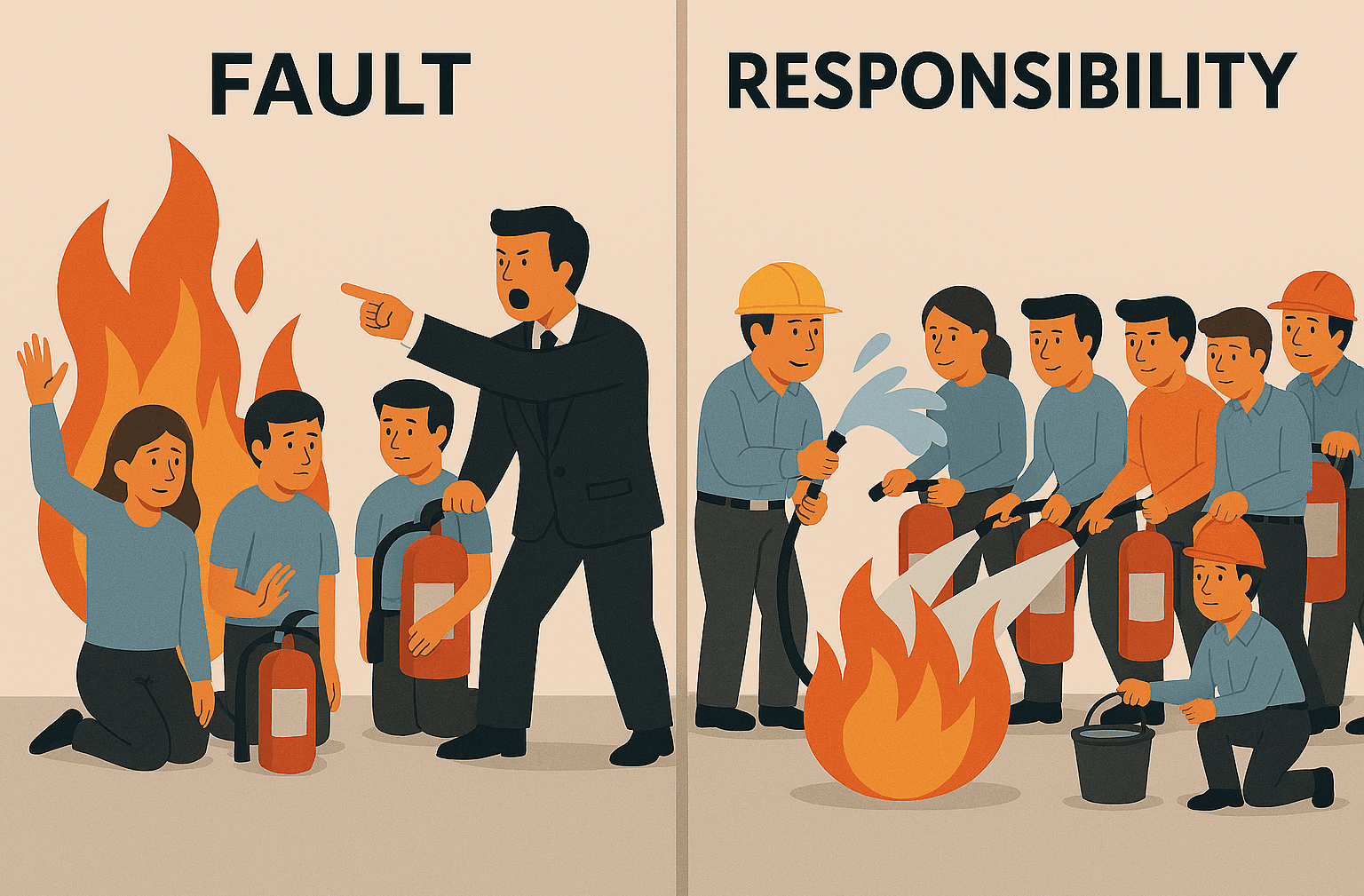
Excellence vs. Empathy
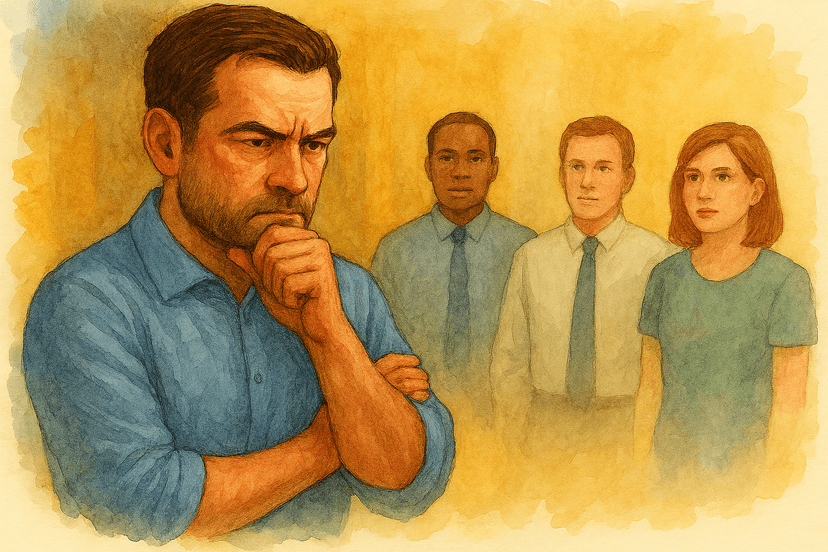
When the Team You Inherit is not the Team You would Build
You inherit a team. You did not choose them. You are expected to deliver results. But what happens when the team's ceiling is lower than your ambition? Do you wait? Do you push? Do you walk away?
This is not just a strategic dilemma. It is a moral one.
The Reality of Inherited Teams
Leadership rarely begins with a blank canvas. More often, it starts with a half-painted mural - shaped by legacy, compromise, and inertia. You step in with vision, urgency, and standards. But the team you inherit may not share your pace, your hunger, or your capacity.
And so the tension begins.
- Do you wait for growth that may never come?
- Do you push harder, risking abrasion?
- Do you replace - if the system lets you?
- Do you leave - if your conscience demands it?
These are not theoretical questions. They are lived ones. Especially on the shopfloor, where performance is visible, and mediocrity is contagious.
The Ceiling Problem
Some team members plateau. Others resist change. Some simply lack the aptitude or attitude to evolve. And yet, you are held accountable for collective output.
You are expected to drive transformation with a team that may not be transformable.
This is where leadership becomes lonely. You want to excel. You want to honour the mission. But you feel tethered to the weakest link - and the system does not always allow you to cut it.
Reframe the Mission
Shift your goal from achieving maximum performance to unlocking maximum potential within your given constraints. This is not about lowering standards; it is about recalibrating expectations to what is realistically achievable with the team you have, turning a frustrating situation into a focused challenge.
Build Micro-Movements
Identify and champion the pockets of excellence that already exist, no matter how small. By highlighting and empowering your high-performers, you can create a positive ripple effect. Culture rarely changes from the top down; it shifts from the edges inward.
Use Visual Leadership
Make performance gaps impossible to ignore by using clear, visual tools. Use dashboards, simple charts, and powerful storytelling to show-not just tell-where the team is falling short. This invites shared ownership of the problem without resorting to blame.
Redefine Roles
Analyse whether the issue is the person or the position. Sometimes, a team member is failing not because of a lack of skill, but because of a poor fit. Consider rotating, redesigning, or reassigning roles to better align with individual strengths and aptitudes.
Protect the Empty Seat
An empty seat on the team is painful, but filling it with an inefficient or misaligned person is corrosive. It sends the message that mediocrity is acceptable. If you must compromise, do so consciously, document the operational cost, and never stop advocating for the right fit.
When Disruption Is Necessary
If the team is actively blocking progress, disruption may be the only path forward. But it must be principled, not impulsive.
- Lead with Clarity: Explain the "why" behind every change.
- Act with Dignity: Preserve relationships, even in hard decisions.
- Move with Direction: Have a clear plan for what comes next.
When You Feel Like Leaving
Sometimes, the constraint is not just the team - it is the system. If leadership above you dictates mediocrity, and you are forced to compromise your standards, the question becomes existential:
Can I still grow here? Can I still lead here? Can I still be proud here?
If the answer is no, then leaving is not quitting. It is choosing integrity.
Final Thought
Leadership is not a popularity contest. But it is not a dictatorship either. The real challenge is to lead with both empathy and excellence - even when the team is not yours, the tools are not sharp, and the system is not fair.
Because in the end, the legacy you leave is not just in results. It is in how you led when things were hard.