The Day the Chef Left
The Day the Chef Left: A Lesson in Going to See
A close friend of mine owns a restaurant. His background is rooted in hospitality, front of house, customer experience, and the small details that shape how a restaurant feels to the guest. When the opportunity arose to own his own place, he stepped into the role of owner with confidence, managing the business while employing a chef to take responsibility for the kitchen, including menus, recipes, preparation methods, and cost control.
For seven years they worked together, building trust and familiarity. The chef was experienced and opinionated, someone who clearly knew his craft. My friend focused on running the restaurant as a whole, trusting that the kitchen was being managed professionally. On the surface, everything looked fine.
Over time, however, something began to feel off. Costs were rising and margins were tightening, even though customer volumes had not changed dramatically. Gas bills seemed unusually high. Food wastage felt excessive. When my friend raised these concerns with the chef, the response was defensive. Questions were met with remarks about trust and professional judgement, and the underlying message was clear. This was how a kitchen was meant to run.
Faced with confidence and experience, my friend did what many leaders do. He trusted the expert. The kitchen always looked busy. Prep stations were full, fridges stocked, pans simmering. To the untrained eye, activity looked like productivity. Despite a nagging sense that something did not add up, he held his concerns back and continued to monitor the numbers from a distance.
Then, unexpectedly, the chef handed in his notice.
The reaction was near panic. Years of reliance on one individual had left a gap that suddenly felt dangerously wide. While my friend had absorbed a great deal of kitchen knowledge over the years, he had never run the kitchen himself. There was no choice but to step in. On the chef's final day, my friend took charge.
That was when everything changed.
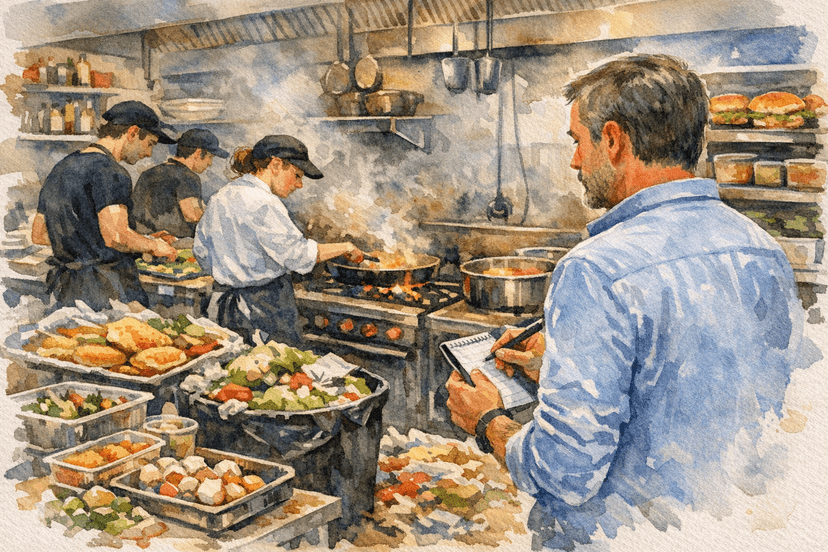
For the first few days, he focused on observing rather than directing. He spent time in the kitchen, walking the space, watching the flow of work, staying present while allowing the team to carry on. He kept his distance, ready to support if needed, but intentionally avoided interfering. Afterall, the kitchen staff knew best!. Right?
He took notes quietly and asked questions sparingly. His aim was not to change anything yet, but to understand.
As he became more involved, helping with preparation and daily tasks, questions naturally began to surface:
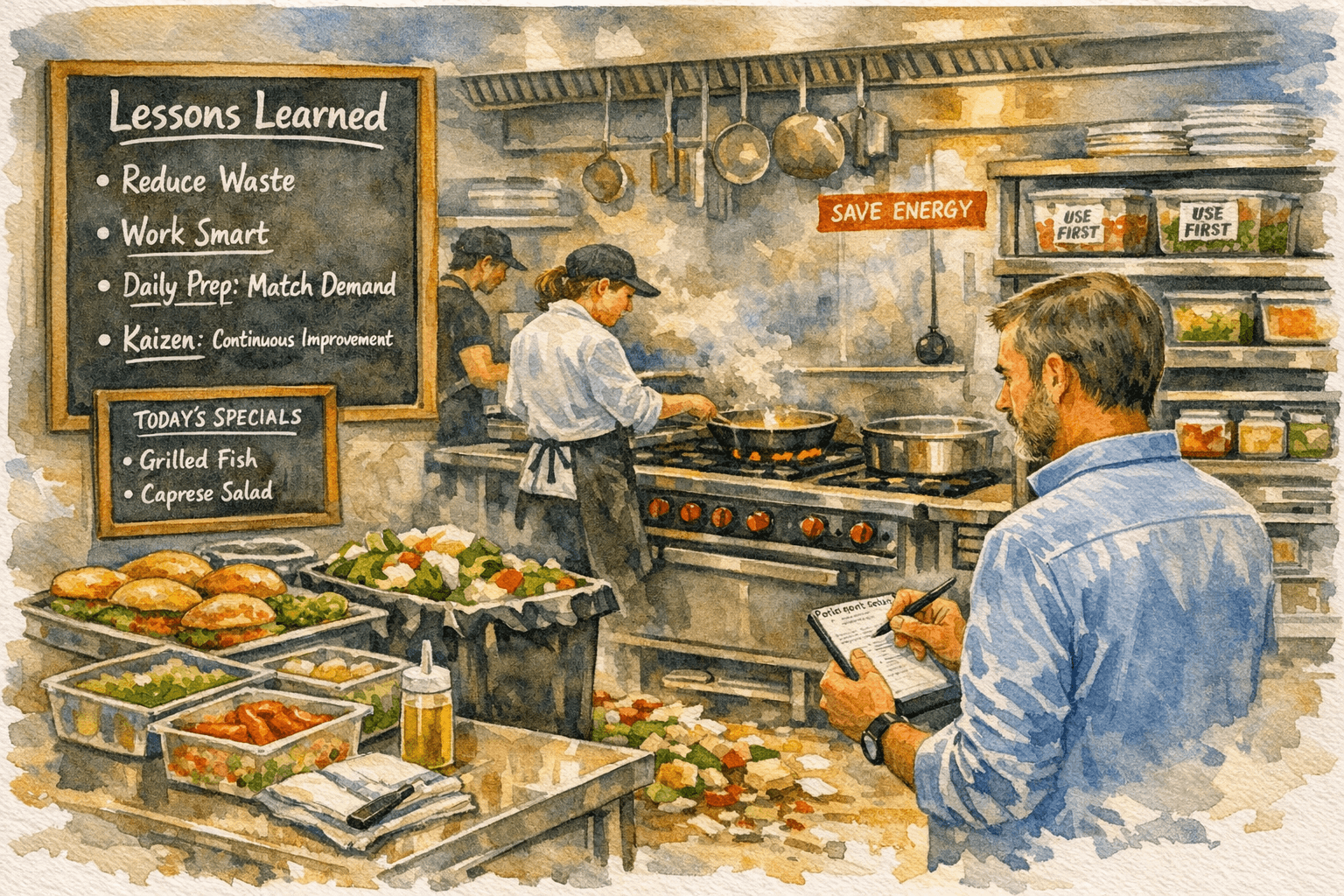
- Energy WasteHe noticed burners left on full flame throughout the day and wondered why.
- Excessive PrepHe spotted multiple containers of prepped ingredients sitting unused in the larder.
- Product CareHe saw burger buns sliced and left open, exposed to drying out.
- Demand AlignmentThe fridges were always full, even on quieter days, asking whether this level of preparation actually matched demand.
None of these questions were accusatory. They were observations born from proximity. From being there.
What he discovered quickly was eye opening. The burners, it turned out, were often left on to keep the kitchen warm during colder days, using gas as a substitute for heating. Preparation volumes were driven by habit rather than demand, with fridges kept full to give the impression of readiness and busyness. Large batches were prepared regardless of sales patterns, leading to significant spoilage every few days. From the outside, the kitchen looked productive. On the inside, waste was quietly accumulating.
When we spoke about a month later, I was genuinely taken aback. In just four weeks, his gas bill had gone down by 50%. Food waste had been reduced to roughly a fifth of what it previously was. The kitchen was calmer, the team more engaged, and service smoother.
There had been no major overhaul. No new systems. No targets imposed. No pressure from above.
When I asked how he had achieved it, his answer was disarmingly simple. He admitted that for years he had never really questioned what happened in the kitchen. He had trusted that expertise equated to control. This time, his mindset was different. He wanted to learn. His questions were not backed by judgement but by curiosity, and that created space for honest conversations.
Together with the team, practical changes followed:
- Heating ManagementManaged through radiators rather than open flames.
- Energy ConservationBurners were turned down when not in use.
- Demand FlowPreparation volumes were aligned with actual demand, informed by menu trends and historical sales.
- Waste ReductionSlower moving items were repositioned as specials, helping to reduce waste without limiting availability.
What struck me most was that none of these improvements were particularly complex. They were obvious once someone stood in the kitchen long enough to notice them. The insight had always been there, embedded in the work itself.
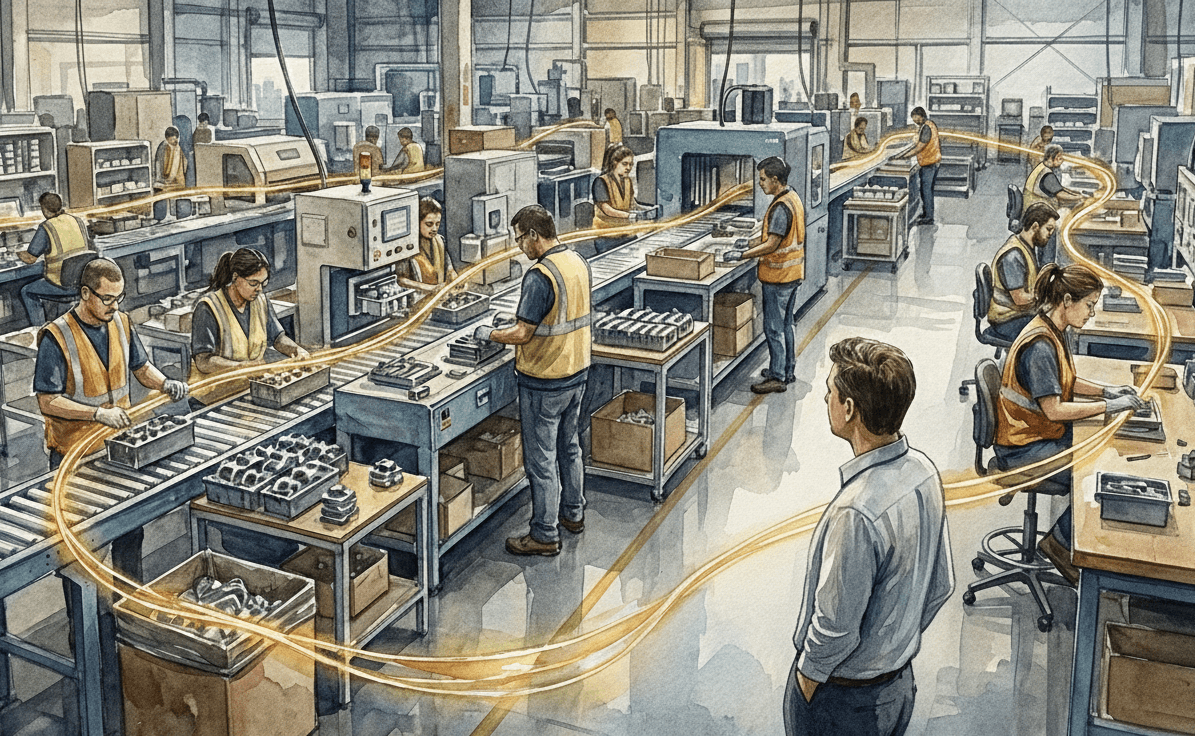
This is Gemba in its purest form.
My friend did not set out to implement Lean or apply formal methodologies. He went to see. He observed how work was truly performed, listened without rushing to fix, and treated the team as partners in understanding the system. Waste became visible because someone was present enough to notice it. Improvements followed naturally from that understanding.
There is a quiet risk in leadership as we move further from the work itself. Data, dashboards, and trusted intermediaries can create confidence, but they can also create distance. Trust matters, but trust without visibility can blind us to reality.
Gemba is not about catching people out or questioning competence. It is about closing the gap between perception and truth. It reminds us that real improvement does not begin with answers, but with seeing clearly.
Before we optimise, restructure, or challenge performance, we would do well to pause and go to see. When curiosity replaces judgement, learning accelerates. When leaders are present where value is created, insight follows.
That is where sustainable improvement begins.
At the Gemba.