5S - More than Just Tidying Up
5S: More Than Just Tidying Up
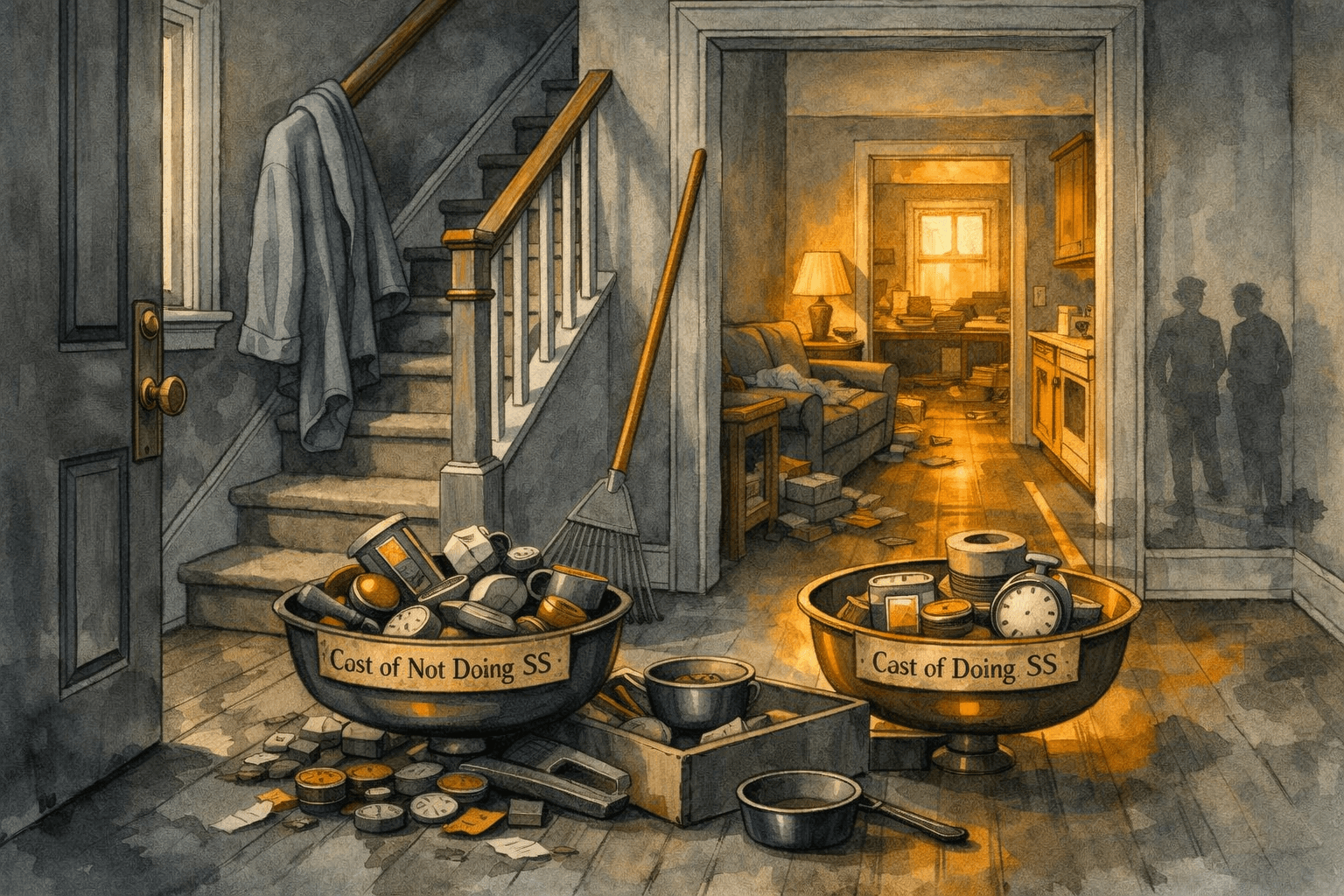
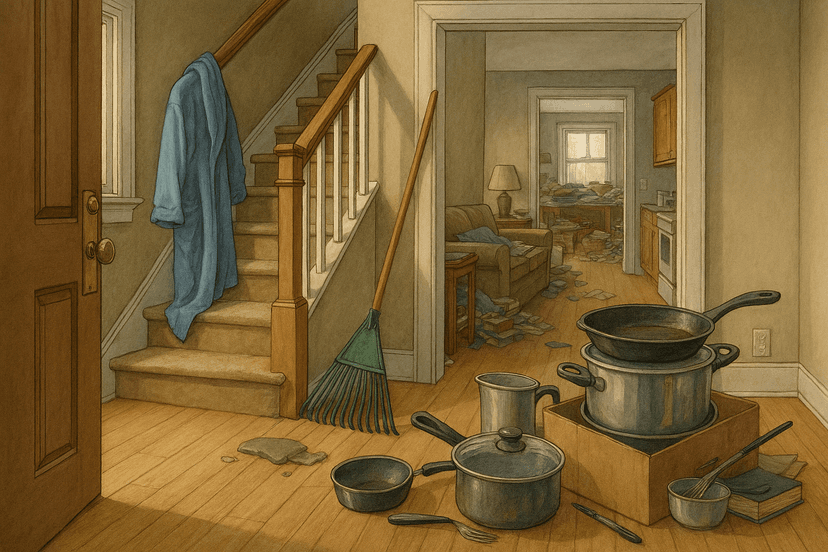
Imagine being invited to someone's home for coffee. You step inside and see chaos- a bathrobe draped over the staircase, a rake leaning against the kitchen counter, and last week's pots and pans scattered across the living room. What impression does that leave?
Now, think about walking onto a shop floor. When most people hear "5S," the first thing that comes to mind is cleaning up: throw away rubbish, tape the floor, update visual boards. It feels like a chore- a box-ticking exercise where the continuous improvement manager walks around saying, "You're not doing 5S."
But is that really what 5S is about?
The Essence of 5S
5S stands for Sort, Set in Order, Shine, Standardize, and Sustain- derived from the Japanese terms Seiri, Seiton, Seiso, Seiketsu, and Shitsuke. At face value, it's about tidiness. But at its core, 5S is a visual management system- a silent metric that reveals flow, space utilization, inventory levels, and even process health without a single chart or KPI.
When implemented well, 5S transforms the workplace into a self-auditing environment. It's not just about looking neat; it's about creating clarity, reducing waste, and enabling continuous improvement.
A Kitchen Analogy
To understand 5S, let's step into the kitchen.
- SortBefore cooking, you clear yesterday's dishes. You remove what's unnecessary so you can start fresh.
- Set in OrderYou arrange ingredients and tools where you'll need them. In a kitchen, that's mise en place. In an operating theatre, it's surgical instruments lined up. If something's missing, you know instantly.
- ShineYou wipe down surfaces. A clean environment signals readiness and prevents contamination.
- StandardizeYou create a routine- salt and pepper always within reach, wooden spoon in the same drawer. This consistency means anyone can step in and work without confusion.
- SustainYou repeat the cycle until it becomes habit. Over time, you refine- maybe the cutlery works better next to the hob. That's continuous improvement.
This analogy shows that 5S isn't just about cleaning- it's about flow, efficiency, and discipline.
Why It Matters
5S isn't about tape and paint- it's about visibility. A tool missing from a shadow board signals a problem. Material in a transport aisle tells you the milk run failed. In an operating theatre, a missing instrument could mean a life-threatening error.
These visual cues are powerful. They give you instant feedback without a meeting or a report. 5S becomes your silent, disciplined partner in operational excellence.
The Foundation for Continuous Improvement
When 5S is embedded into daily routines, it creates a culture of ownership and accountability. It's not a one-time project- it's a mindset. And when that mindset takes hold, continuous improvement becomes second nature.
So, what does 5S mean to you? Is it a chore- or a strategic tool that transforms how you see your workplace?