Norm Theory for Managers
Part 2 - Norm Theory : From "What‑If" to What's Next
Quick Recap
In Part 1, we met Emma and John and watched a team focus almost entirely on a single, last‑minute tweak. In this article, we'll name what was happening (Norm Theory), show how it shaped everyone's reactions, and give you a simple playbook to turn counterfactuals; those powerful "what‑if" thoughts, into progress.
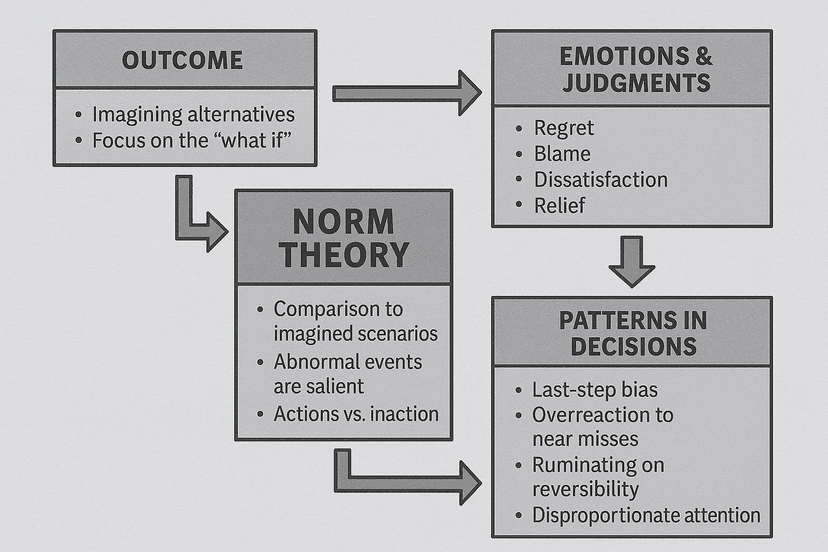
Norm Theory (Kahneman & Miller, 1986) explains why people judge outcomes by comparing what happened to what could have happened, mentally generated alternatives called counterfactuals. These "what‑ifs" are constructed after the fact, often by retrieving similar experiences or imagining a more "normal" path. When a cause feels abnormal (unusual, last-minute, out of routine), counterfactuals come fast and strong, amplifying emotions like regret, blame, disappointment, or relief. That's why a single tweak can overshadow the broader system dynamics that actually set the stage.
Simple takeaway: our emotions follow the ease of imagining an alternative, not the evidence for it. [gsb.stanford.edu]
Mapping the Story to 5 Predictable Traps
- Last‑Step BiasWhen outcomes disappoint, attention locks onto the final action because it's the easiest piece to mentally "undo." We naturally reverse the last link in the chain, making that step feel overly causal-even when the data disagree. [link.springer.com]
- Action vs. Inaction AsymmetryWe judge actions that end badly more harshly than inactions that end just as badly-especially when the social norm leans toward "leave it alone." Change feels more blameworthy than stasis, even if stasis had equal or worse odds.
- Over‑learning from Near MissesCounterfactuals push us toward tactical overreactions ("flip the procedure now!") after small deviations or near misses, while also encouraging strategic rigidity ("let's not touch the big plan").
- Reversible Decisions Increase RuminationWhen choices remain open or easily reversible, people second‑guess more and feel less satisfied. Reversibility keeps the counterfactual window wide open ("we could still switch..."), which increases post‑decision dissatisfaction.
- Abnormal Events Get Disproportionate AttentionUnusual causes feel more "undoable," so they hijack attention and emotions, overshadowing systemic contributors. Abnormal cues evoke the strongest counterfactuals.
Manager's Playbook: Five Moves to Break the Cycle
1. Separate decision quality from outcome quality Run reviews that judge the process and information at the time of choice, not just the outcome we now know. Ask: Given what we knew then, was this a reasonable action? This counters hindsight and the emotional pull of easy "what‑ifs."
2. Protect thoughtful initiative Because actions attract more regret than inactions, make initiative a norm. Praise well‑reasoned attempts-even when outcomes aren't perfect. Research shows social norms can shift how strongly the action‑vs‑inaction bias plays out.
3. Reduce avoidable ambiguity Clear criteria and decision rules shrink the space for imagined alternatives later. The fewer plausible "normal" paths people can conjure after the fact, the less unhelpful rumination you'll see.
4. Close decisions where possible Avoid keeping choices in a reversible state longer than necessary. Explicit "lock‑in" points reduce second‑guessing and boost satisfaction by shutting down the counterfactual loop.
5. Channel counterfactuals into learning Don't suppress "what‑ifs"-shape them. Encourage upward, actionable counterfactuals ("Next time, what exactly would we change?") and align them with the team's motivational style so they feel right and actually stick.
Real leadership isn't about punishing the last step; it's about understanding the whole picture and building systems that allow teams to breathe and grow.