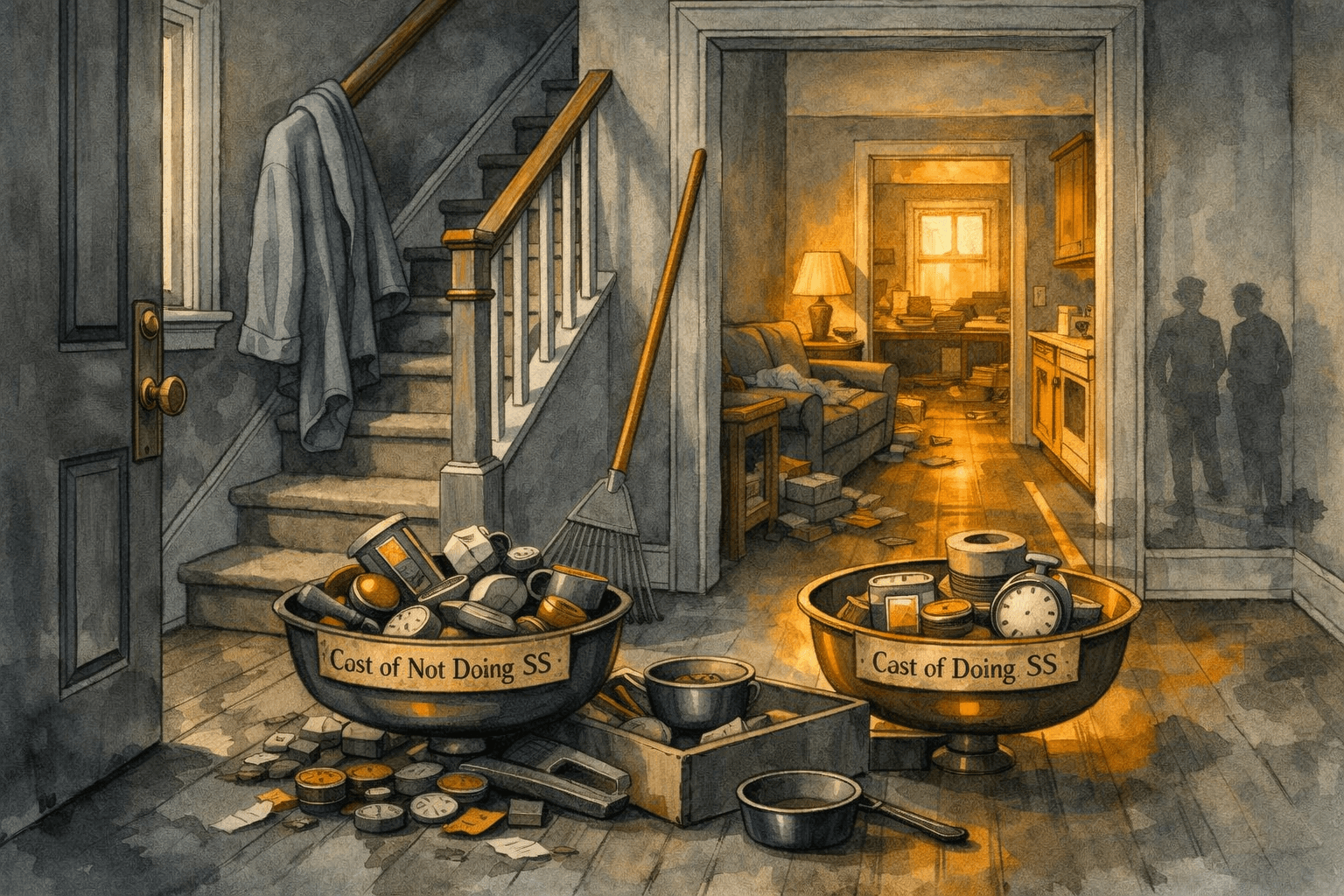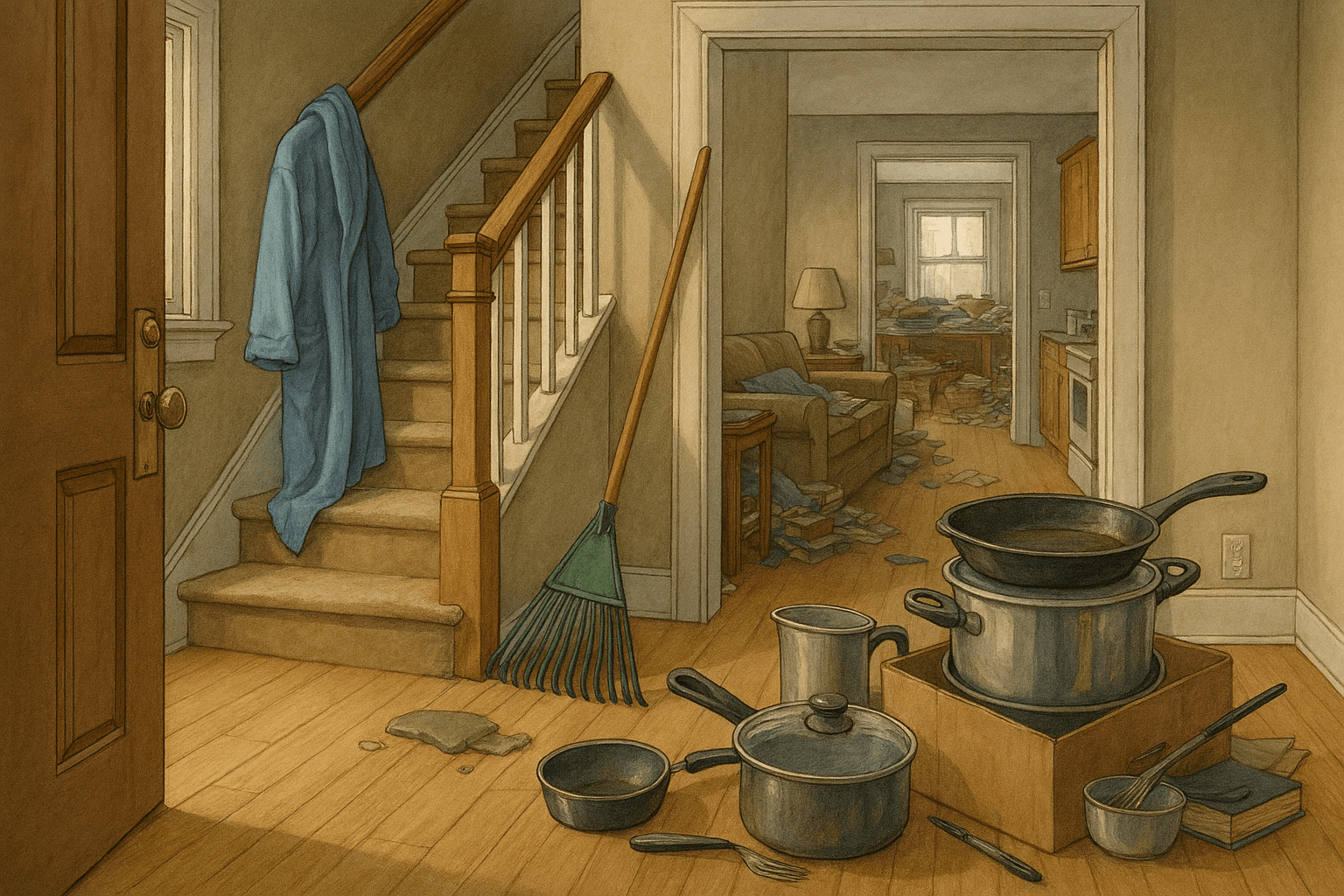
One Piece flow vs. Batch
When One-Piece Flow Isn't the Answer, and Why It Still Matters
Lean practitioners love the elegance of one-piece flow. It's the gold standard: zero waste, zero waiting, zero inventory, pure value streaming straight to the customer. In theory, it's beautiful. In practice, it's complicated.
Because if we're honest, nobody is producing a single fork from a single grain of iron ore. Nobody is carving one toothpick from a single tree trunk. And no operator wants to print ten separate work orders when one will do. The "Eutopia state", where every action adds value and nothing is wasted, is an aspiration, not a daily reality.
Yet the principle behind one-piece flow remains powerful. And the reason is simple: speed to customer.
To understand why, let's step into a real production story.
A Tale From the Line: The Case of the Ten Brackets
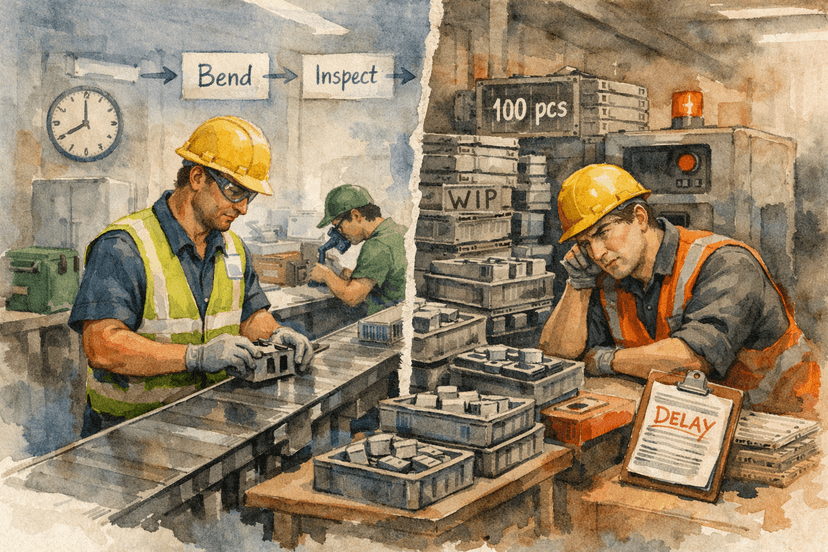
A fabrication cell was struggling with late deliveries. The product was simple: a small metal bracket. The batch size was a hundred. Operators would laser-cut a hundred blanks, bend a hundred brackets, inspect a hundred brackets, and only then release them to assembly. Why? It was the "best practice". It reduced change overs for material, tooling, jigs and alignment. It was easier for the team to simply start a batch of 100 and get through it.
On paper, it made sense. The ERP system generated a single work order for a 100 units. The paperwork was tidy. The operator could "get into a rhythm." Inspection was efficient ,check a hundred at once, stamp the sheet, move on.
But final assembly team weren't waiting for ten brackets. They needed one, urgently.
The Day the System Broke Down
One morning, assembly called: "We need one bracket now. The machine is down without it." The fabrication operator looked at the queue. The next batch of a hundred brackets was halfway through bending. Twenty were done. Eighty were not. The inspection sheet was blank, because the batch wasn't complete.
"Sorry," he said. "I can't release them until all are finished and inspected."
Assembly waited. Line down for the next 3 hours. The business paid the price.
The Hidden Cost of Batching
Batching feels efficient. It feels organised. It feels logical. But it hides several forms of waste:
- Waiting, the customer (internal and external) waits for the batch to finish
- Overproduction, making more than is immediately needed
- Inventory, piles of WIP that nobody can use yet
- Defects, discovering a problem only after ten pieces are made
- Information delay, inspection feedback arrives too late to prevent rework
And the biggest one: Delayed value delivery. One-piece flow doesn't eliminate these wastes entirely, but it exposes them instantly.
Why One-Piece Flow Feels Hard
People often assume resistance to one-piece flow is cultural. But much of it is structural:
1. Operators prefer batching because it reduces cognitive load It's easier to process ten identical parts in a row than to switch context every few minutes.
2. ERP systems are built around batches One work order for ten units is administratively simpler than ten work orders for one unit each.
3. Inspection processes are designed for groups, not individuals Batch inspection feels efficient ,even if it delays feedback.
4. Material transformation often requires batchingYou can't melt one gram of steel. You can't kiln-fire one ceramic tile. Some processes are inherently batch by nature.
This is why one-piece flow is not a universal solution. It's a strategic one.
The Real Purpose of One-Piece Flow
The goal isn't to force every process into single-unit production. The goal is to shorten the time between customer need and customer fulfilment.
One-piece flow is simply the most direct path to that outcome. When you can deliver one unit without waiting for nine others:
- Lead time collapses
- Quality issues surface immediately
- Rework is minimised
- Cash flow improves
- Customer satisfaction increases
Even if the upstream process must batch (like melting steel), downstream processes can still flow.
A More Mature View: Flow Where It Matters
Lean isn't about dogma. It's about designing flow where flow creates value.
Sometimes that means one-piece flow. Sometimes that means small batches. Sometimes that means decoupling points, supermarkets, or FIFO lanes.
The key is understanding the trade-offs. One-piece flow isn't about perfection. It's about responsiveness. It's not about eliminating batches entirely. It's about eliminating the waiting caused by batches. And it's not about forcing operators into unnatural rhythms. It's about designing systems that serve the customer first, and the process second.
The Eutopia state may be unreachable, but every step toward it reduces waste, increases speed, and strengthens competitiveness.
Flow is not the enemy of batching. Flow is the antidote to delay.